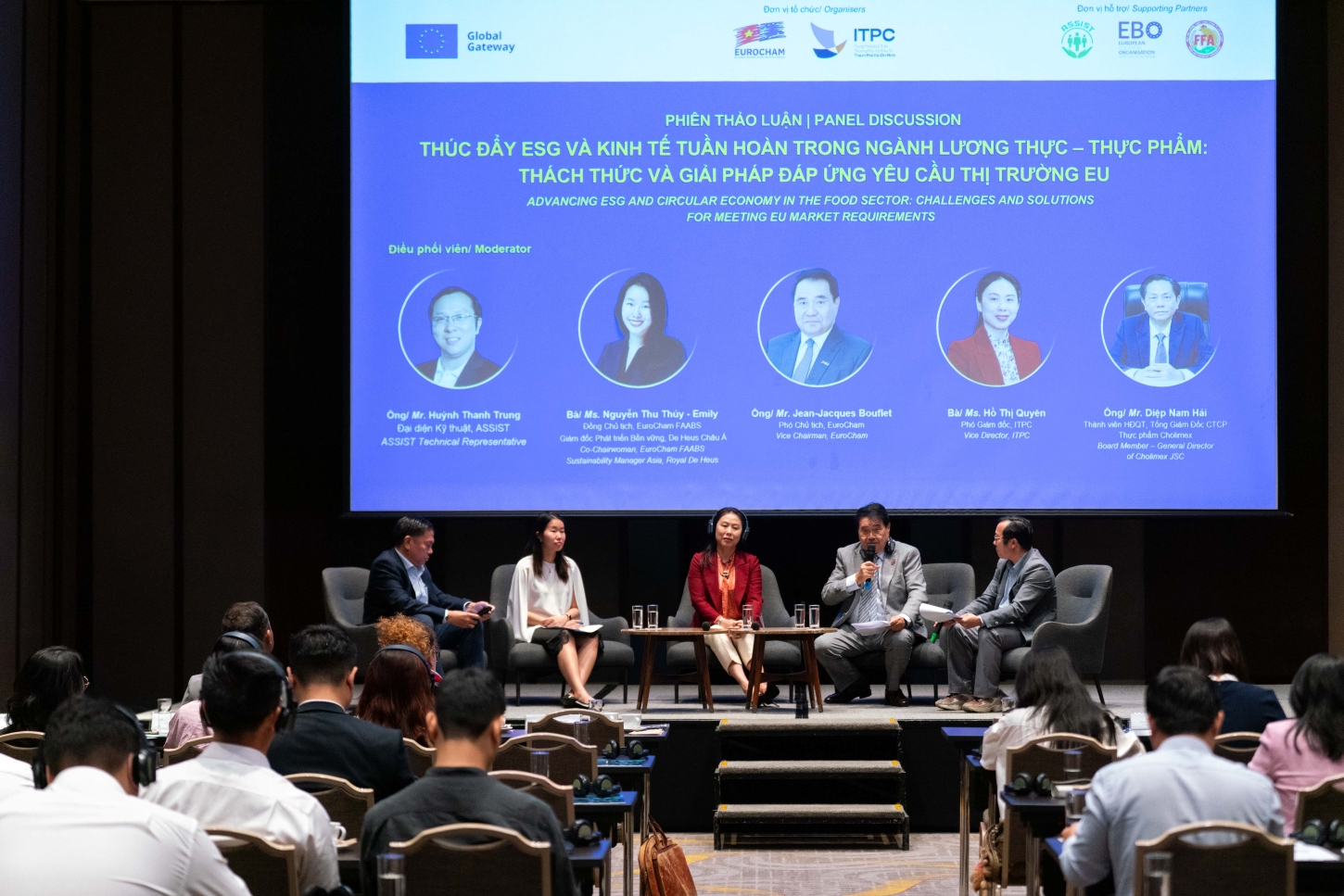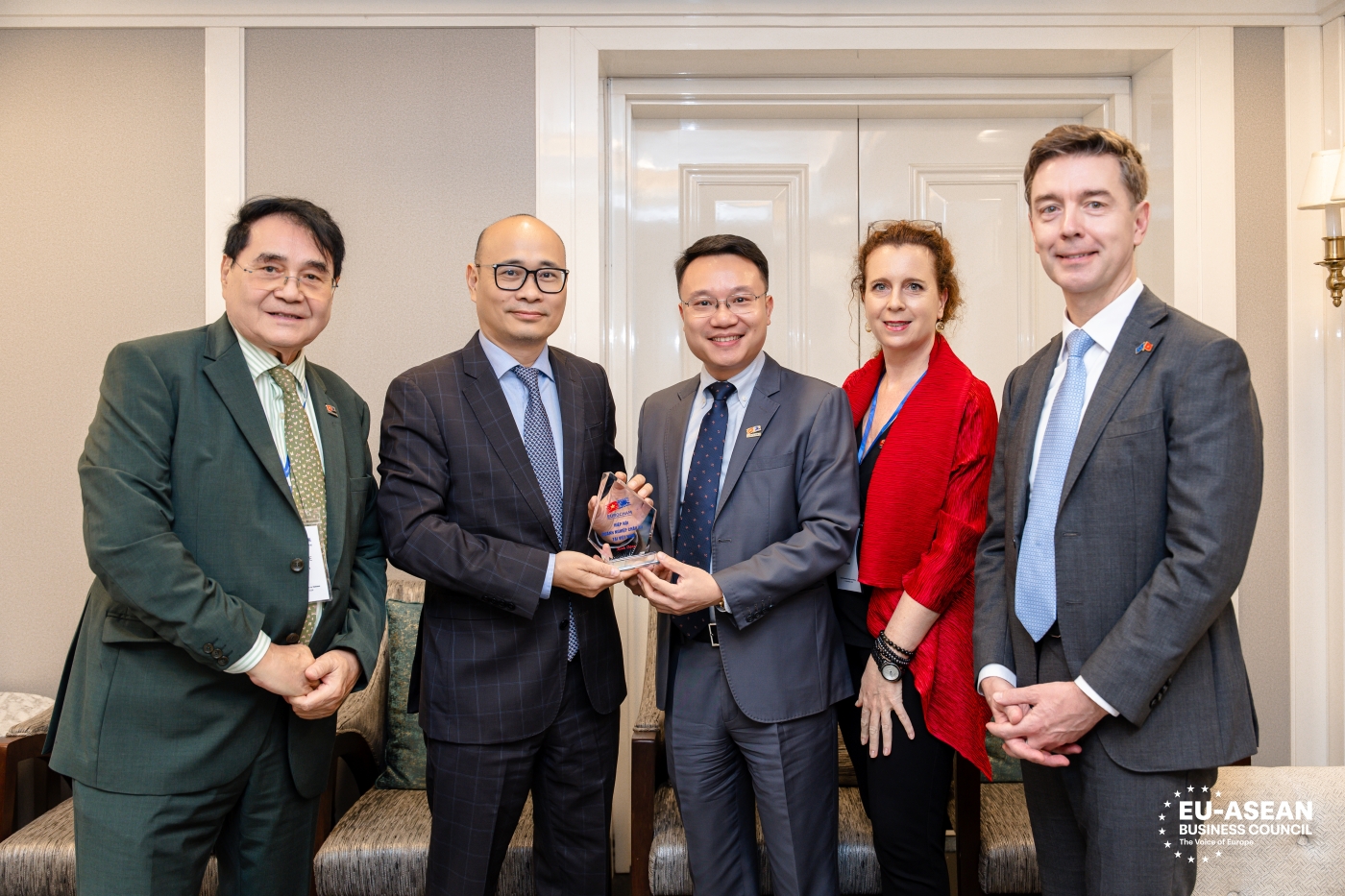

On 18 November 2026, EuroCham and our Mobility Sector Committee joined a meeting hosted by the Ministry of Science and Technology (MOST) to discuss Notice No. 580/TB-VPCP of the Government Office, which conveys the Deputy Prime Minister’s conclusions on resolving obstacles related to technology transfer in car and motorcycle manufacturing and assembly.
The meeting was chaired by Ms Van Anh, Director General of the Department of Technology Appraisal and Evaluation, together with Mr Si, Deputy Director of the Legal Department. Participants included representatives from MOST, the Ministry of Justice, Ministry of Construction, Ministry of Industry and Trade, Ministry of Finance, Government Office, local Departments of Science and Technology, as well as industry associations and manufacturers, including the Vietnam Association of Motorcycle Manufacturers (VAMM).
EuroCham was represented by Mrs Huyen Dang, Advocacy Manager; Ms Dang Kha Quynh, Mobility Sector Committee Member; and Ms Thao Dinh, Sector Committee Coordinator.
Key clarifications for businesses
A central issue discussed was the treatment of technologies on the prohibited or restricted technology transfer lists. MOST confirmed that there will be no separate exemption allowing prohibited or restricted technologies to be transferred for vehicles manufactured or assembled solely for export. The position is based on the legal principle that technology is regulated at the input stage, according to the nature of the technology, rather than by the market in which the resulting product is sold. As such, the export destination does not change the classification of the technology.
The discussion also clarified the treatment of existing factories and production lines. Facilities already using prohibited or restricted technologies may continue operating, including producing new products and models, provided they remain within the capacity already licensed by the competent authority. However, this protection does not extend to new production lines or newly received prohibited or restricted technologies. For businesses operating existing facilities, it will therefore be important to document the technology and production capacity originally approved, particularly when considering future changes or expansions.
Technology changes remain a key consideration
Another important point concerned the interpretation of “change of technology”, which remains an area requiring further clarification. Extensions, addenda and capacity increases may be accepted where the nature of the technology remains unchanged. In practice, businesses may need to provide a technical explanation demonstrating that a proposed change does not alter the underlying technology. For more complex cases, companies may also seek consideration by the relevant advisory council.
The meeting also confirmed that technology transfer contracts signed before 11 April 2026 may still be extended and used for continued production, provided that the nature of the technology remains unchanged.
A continued channel for case-by-case engagement
While the Government’s position on the export exception is now clear, the meeting highlighted areas where practical implementation and case-specific clarification remain important for businesses.
MOST invited businesses to engage on specific cases, creating an avenue for EuroCham to channel concrete member cases to the Ministry and seek clarification on individual situations.
For members affected by the technology transfer rules, this makes it particularly important to assess existing technology transfer arrangements, licensed capacity and any planned changes against the requirements clarified during the meeting.