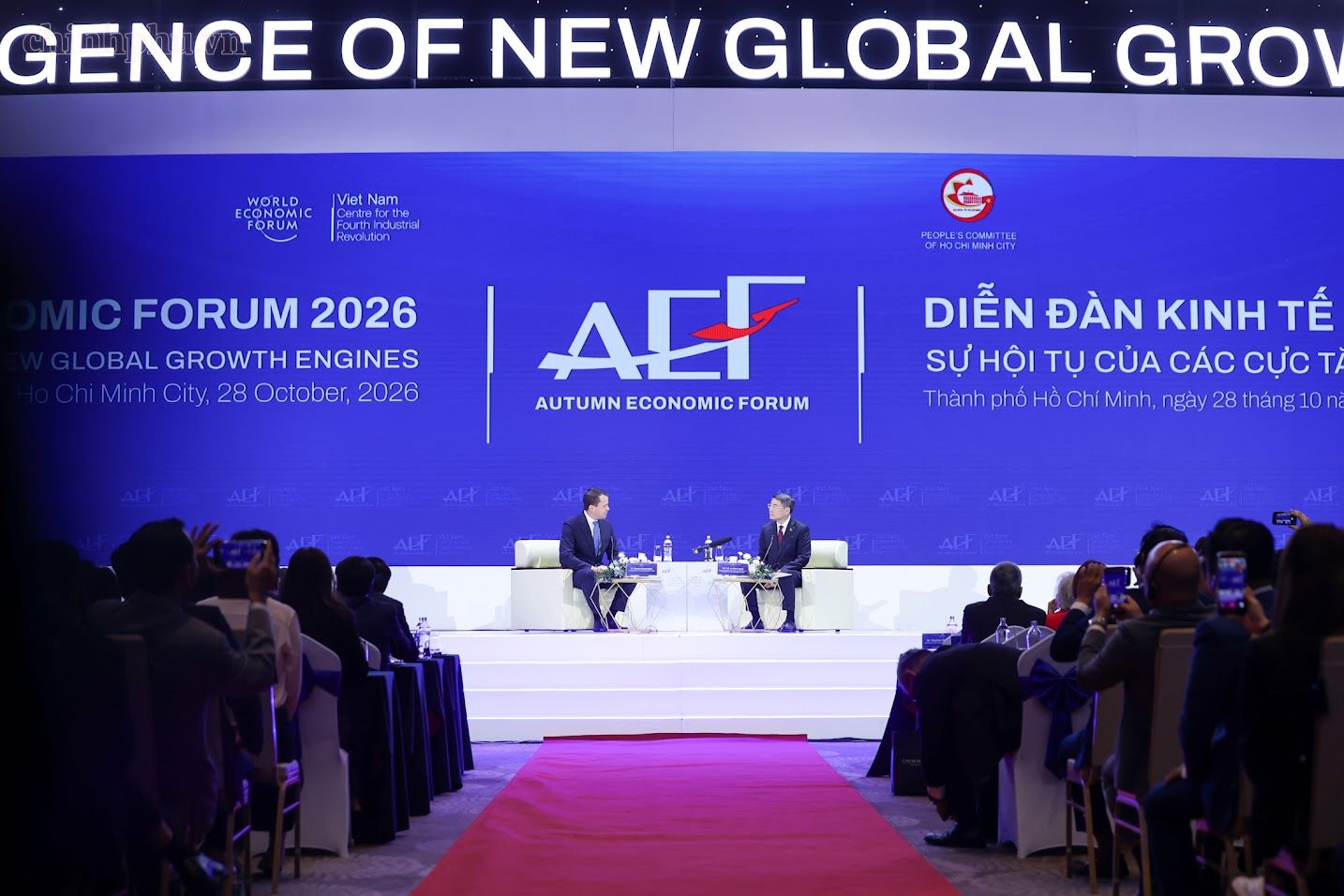
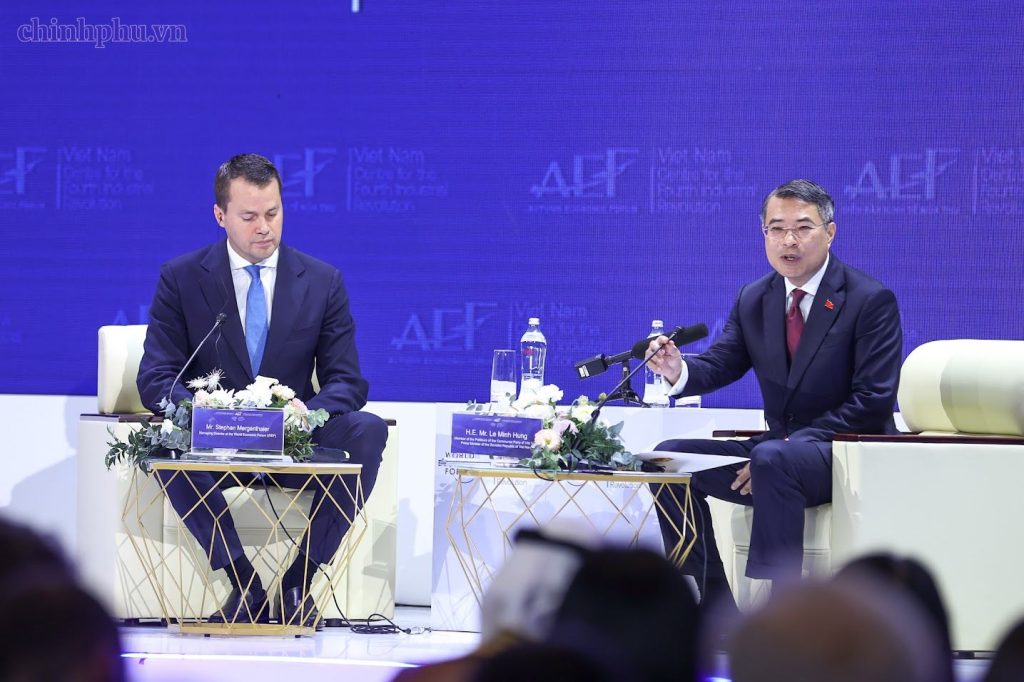
On 28 October, at the Autumn Economic Forum in Ho Chi Minh City, Prime Minister Le Minh Hung held a dialogue with Mr. Stephan Mergenthaler, Managing Director of the World Economic Forum (WEF), under the theme “Positioning Viet Nam in the Global Future”. A EuroCham delegation led by Board Member Mads Werner attended this high-level dialogue.
At the session, Prime Minister Le Minh Hung highlighted five key areas for Vietnam’s growth:
1. Global Shifts and Their Implications for Viet Nam
The Prime Minister highlighted growing geopolitical fragmentation, strategic competition, technological rivalry and supply chain restructuring. These developments pose three major challenges: adapting global institutions and rules, transforming traditional growth models, and rebuilding strategic trust.
In response, Viet Nam is prioritising strategic autonomy alongside deeper international integration, a growth model driven by science, technology, innovation and digital transformation, and institutional and governance reforms. Viet Nam also reaffirmed its support for globalisation and international cooperation, positioning itself as a reliable partner and stable investment destination.
2. Building New Drivers of Growth and Economic Resilience
Viet Nam aims to strengthen its resilience through five priorities: maintaining political and macroeconomic stability; modernising institutions and reducing administrative burdens; developing strategic infrastructure and promoting technology, innovation and digital transformation; strengthening domestic enterprises while attracting selective FDI linked to technology transfer and local value creation; and improving education, workforce skills and international partnerships.
Over the previous six months, the Government reported a 53% reduction in administrative processing time and a 55% reduction in compliance costs. Diversifying markets, partners, energy sources and supply chains is also essential to mitigating external risks.
3. Positioning Viet Nam in the Future Global Economy
By 2035, Viet Nam aspires to become an emerging hub for digital industries, clean energy and green agriculture, as well as a trusted link in regional and global supply and value chains.
Its key competitive advantages include strategic geographical location and political and macroeconomic stability; a clear development vision and ongoing reforms to capture opportunities arising from global restructuring; and strong domestic foundations, including a population of over 100 million, skilled and adaptable human resources, an established manufacturing base, a dynamic market and abundant natural resources.
4. Foreign Policy and International Integration
Viet Nam reaffirmed its independent, self-reliant, multilateral and diversified foreign policy, maintaining balanced relations with international partners without aligning with any single power bloc. Strategic autonomy is underpinned by stronger domestic capabilities, economic competitiveness, and security in key areas, alongside deeper international integration. Viet Nam will leverage its 18 signed free trade agreements to diversify markets and partners, attract capital, technology and expertise, and move towards greater technological ownership and higher domestic value creation.
5. From Participation to Co-Creation: Strengthening International Partnerships
Viet Nam called for a shift from transactional cooperation towards long-term strategic partnerships, joint opportunity creation and shared responsibility. It invited governments to develop open and sustainable cooperation frameworks, particularly in trade, investment, infrastructure, and technology.
International businesses were encouraged to contribute not only capital but also technology, expertise, management experience and workforce training, while strengthening local supply chains and supporting Vietnamese enterprises. Viet Nam also expressed its readiness to become a WEF Strategic Partner in the region to advance innovative initiatives with regional and global impact.
In conclusion, the Prime Minister emphasised that Viet Nam is not merely an investment destination but a long-term development partner. He called on international investors to move from “investing in Viet Nam” to “investing together with Viet Nam” through stronger partnerships with domestic businesses, research institutions and universities to develop technology, talent and supplier networks.
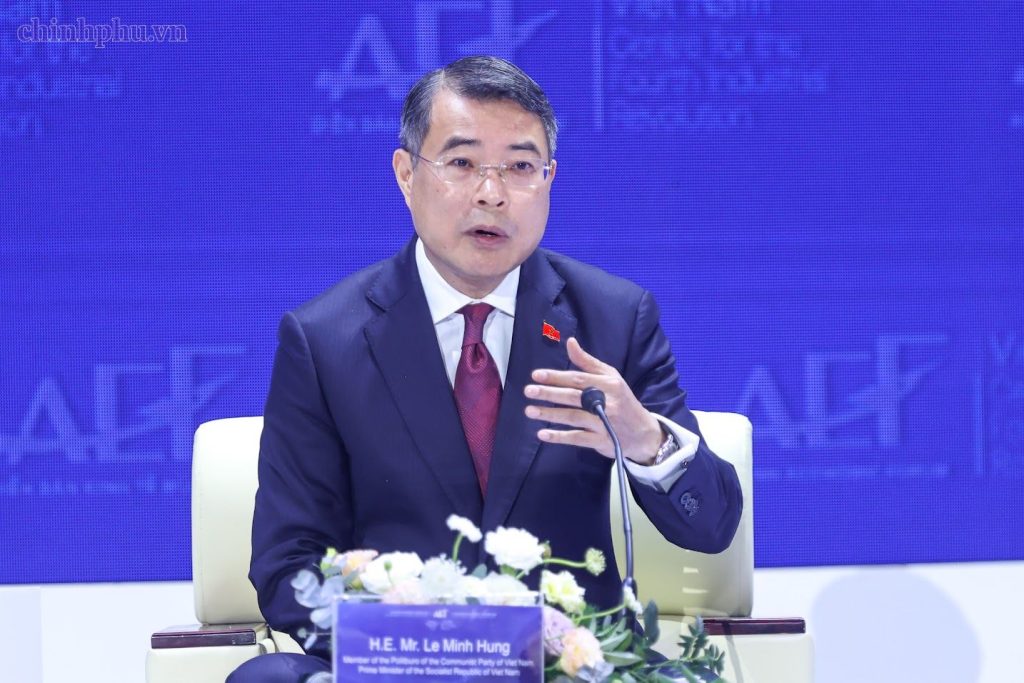
The Government committed to maintaining macroeconomic stability, improving institutions and infrastructure, protecting investors’ legitimate interests, and strengthening dialogue to address business concerns. Viet Nam seeks mutually beneficial, responsible and sustainable partnerships that align business success with the country’s long-term development.
Following our mission to bridge European businesses with Vietnam’s dynamic market, EuroCham will continue to facilitate dialogue, convey the business community’s perspectives, and support partnerships that contribute to Viet Nam’s sustainable and innovation-led development.